
Road signs made of metal are the quiet sentinels of modern transportation infrastructure, safely guiding millions of drivers. They communicate road rules, warn of potential hazards, provide information for nearby amenities and prevent chaotic traffic jams.
Produced primarily of aluminum alloys and stainless steel hardware, and treated with reflective coatings, they’re engineered to withstand harsh conditions and low-light visibility. From red octagonal STOP signs to huge highway navigation signs, the work that goes into these vital everyday objects ensures road signs stand the test of time, while guiding traffic and pedestrians safely to their destination.
Common Road Sign Types
Depending on their role and the information they convey, safety metal road signs can be classified into the following types:
Regulatory Signs
These communicate traffic rules and laws. They describe mandatory requirements or indicate prohibitions that traffic participants must follow. Key examples are “STOP” signs, red and white triangle “YIELD” signs, speed limits set in a white vertical rectangle and prohibition signs in a red circle with a slash, such as “NO PARKING”.
Warning
Warning signs alert drivers, pedestrians and cyclists of nearby hidden dangers or changes to the road ahead. They are usually diamond-shaped, with yellow or orange backgrounds and signage in black. Examples are curves and turns (warning of sharp bends or winding roads); intersections and merges – alerting of upcoming side roads, traffic lights or lanes joining together; and five-side pedestrian and school-zone signs in yellow-green indicating crosswalks and children.
Guide and Navigation
These help traffic and pedestrians navigate to their desired destination. They display information such as distance to towns and cities, route numbers and nearby amenities, including gas stations, national parks, and restaurants. The guide and navigation metal road signs are green, blue or brown, and usually square or horizontal rectangles.
Temporary Road and Construction
Often displayed as orange diamonds, these traffic safety signs warn of temporary road works, lane closures, and reduced speed limits. They’re common along section of extensive roadworks or during emergencies, guiding traffic past temporary hazards.
Fabrication Process and Materials
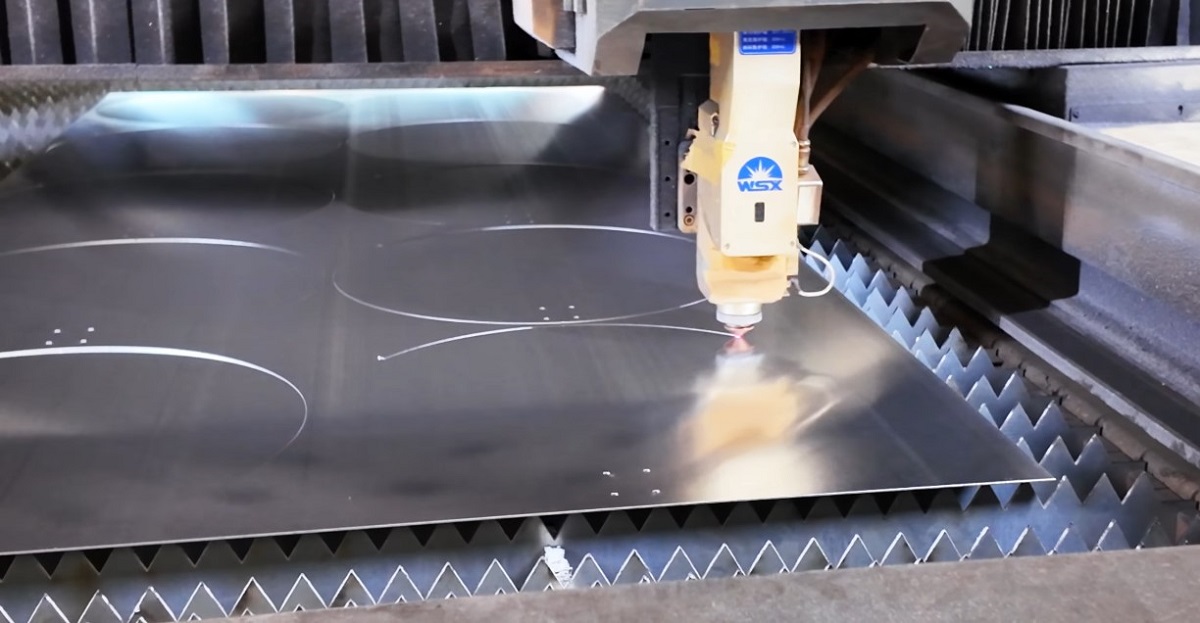
To provide the required durability to withstand harsh weather and road conditions, and provide legibility at night or in low visibility, road signs undergo a comprehensive production process. Signs are cut from sturdy aluminum or steel sheeting, cleaned, coated with reflective sheeting and printed.
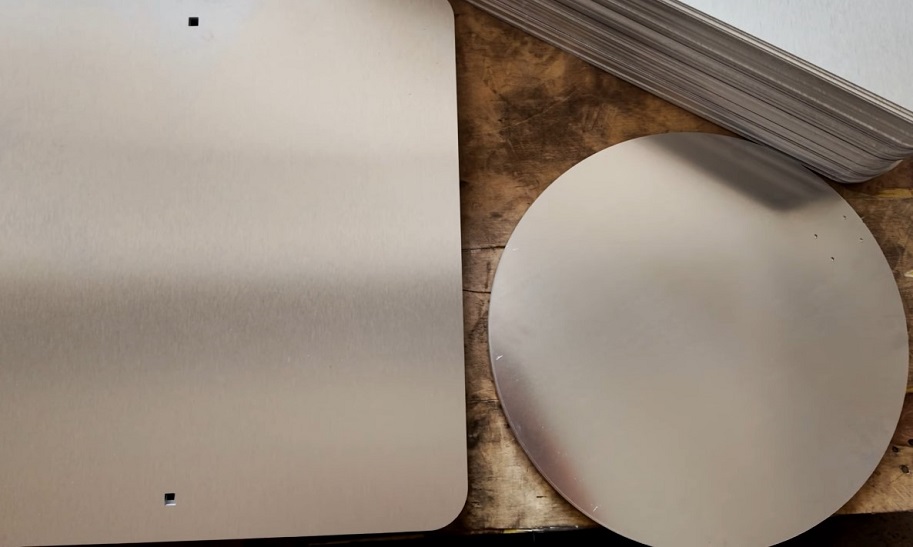
Sign blanks are cut to desired shapes using shears or automated CNC cutters, and corners rounded using notching machines. For easier mounting, holes are punched or drilled into the blanks. These are then cleaned with an alkaline or chemical wash and checked for defects and contamination. Workers apply a continuous sheet of reflective film embedded with microscopic glass beads.
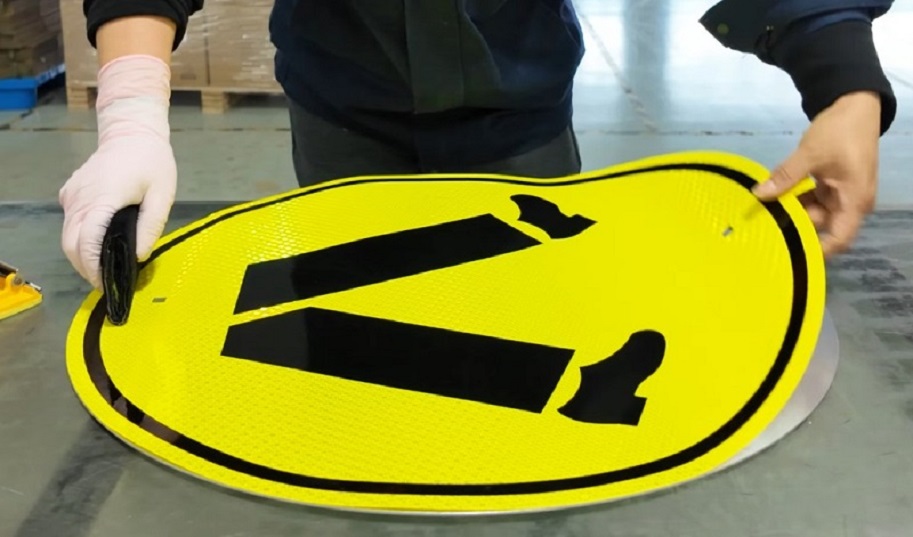
Letters and symbols are then punched out from white or black retroreflective sheeting, and this is then applied to the sign blank using rollers. Printed signs are placed in heat ovens and dried at controlled temperatures to allow the ink to cure and lock into the sheeting. Lastly, a transparent clear laminate is used to prevent fading in direct sunlight, and damage from weathering.
Finished signs are then attached to matching posts and mounting hardware. These can be direct-fit U-channel posts, usually in hot-rolled steel bent to shape using press brakes, and hex-head bolt and washer assemblies that affix the signs at the desired heights.
Material Matters
Choosing the right materials for metal road signs ensures long-term durability, visibility and driver safety. Within a Canadian context, road signs must survive temperature extremes, maintain night-time visibility and ensure drivers are safely guided across vast and varied terrain. Municipalities and provinces rely on specific material standards outlined by the Transportation Association of Canada (TAC). Key areas of concerns are:
- Severe weather and road salt: Signs mostly use marine-grade aluminum alloys that do not rust when exposed to moisture. Crucially for Canada, this means resistance against corrosive liquid brines and road salt using in winter de-icing, which would easily degrade non-galvanized or untreated metals.
- Material thickness: Road-compliant signs used permanently are made to high-gauge thicknesses, often 0.081″ (or 2mm). Larger highway and overhead signs prone to extreme winds are optioned in thicker 0,125″ (or 3mm) gauges.
- Reflectivity in harsh conditions: Long winter nights and sprawling rural highways mandate that signs be visible in low-light conditions. Aluminum provides a flat, non-porous backing surface for advanced retroreflective sheeting, in accordance with ASTM D4956 standards, reflecting up to 60 percent of headlight beams directly back to vehicles. This provides visibility in dense fog, heavy rain and snowstorms.
- Thermal resistance: Severe winters and abrupt temperature swings require signs with adequate thermal expansion coefficients. The protective reflective vinyl overlays, screening inks, and aluminum substrates are engineered to expand and contract together, preventing cracks and peeling. Signs also withstand fading under intense sun exposure, with quality UV-coatings.
- Breakaway support: The durability of signs additionally depends on the quality of the support structures. These are typically made of steel and “breakaway” bases that break away safely in the event of a direct hit from traffic.