
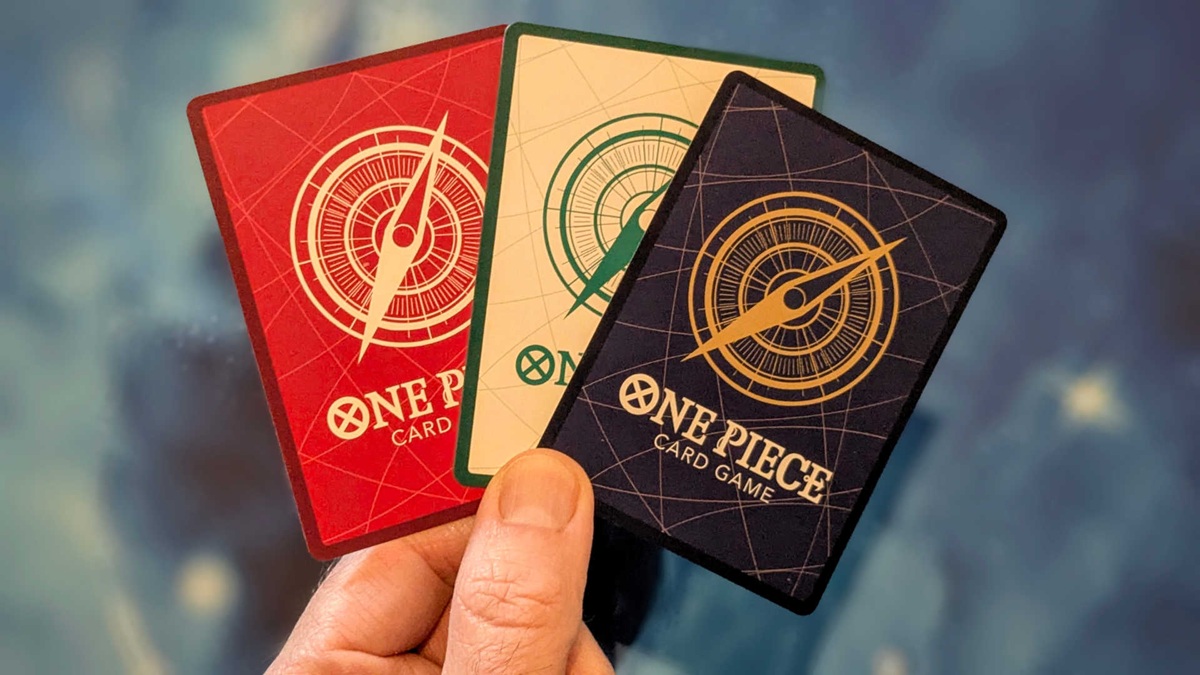
If you’ve been sucked into the One Piece Card Game rabbit hole – welcome. It’s a fun place to be, but you’ve probably noticed that cards come in two flavours: Japanese and English. Same characters, same game, wildly different prices. So, what’s actually going on here?
The Basics
The One Piece Card Game is made by Bandai, and like most big trading card games these days, it’s released in multiple languages, more or less at the same time. Japan got the game first in 2022, with the English edition following in 2023. That head start used to matter a lot, since Japanese sets would drop months before their English counterparts, meaning importers and early adopters could see the actual card pool and market reaction before English players even had product to buy.
That gap has been shrinking, though. Recent sets have narrowed the release gap dramatically – OP-16 released in Japan and English only 13 days apart, and OP-17 cut that down to just six days, the closest the two versions have ever launched. So, the “Japanese always comes first” advantage is basically disappearing for new sets.
What’s Actually Different Between Them?
At first glance, nothing – it’s the same game, same rules, same card pool (eventually). The differences are more about presentation and market behaviour:
Artwork and Text
Some Japanese cards include cultural references, puns, and jokes that don’t translate cleanly into English, so purists often say the fun One Piece card game Japanese feels more “authentic” to the source material. Collectors also tend to gravitate toward Japanese cards for their original artwork and cleaner text layout, while English cards win out for readability and ease of local resale.
Price per Pack
This is where it gets interesting. A Japanese pack runs around $1.47 USD equivalent, compared to $4.99 for an English pack, despite having the same number of cards. That’s a massive gap, and it’s one of the biggest reasons people go for the Japanese One Piece cards even without speaking a word of Japanese.
Pull Rates
Japanese booster boxes tend to contain fewer packs overall, but they often have better pull rates for rares and alternate-art cards, which makes them appealing even to people who don’t care about reading the cards.
Tournament Legality
Here’s the practical kicker. If you want to play in official events, your deck has to be all-English – no mixing languages. So, if you’re building a competitive deck, Japanese singles are basically collector pieces or proxies unless you’re playing in Japan itself.
Are Japanese or English One Piece Cards Worth More?
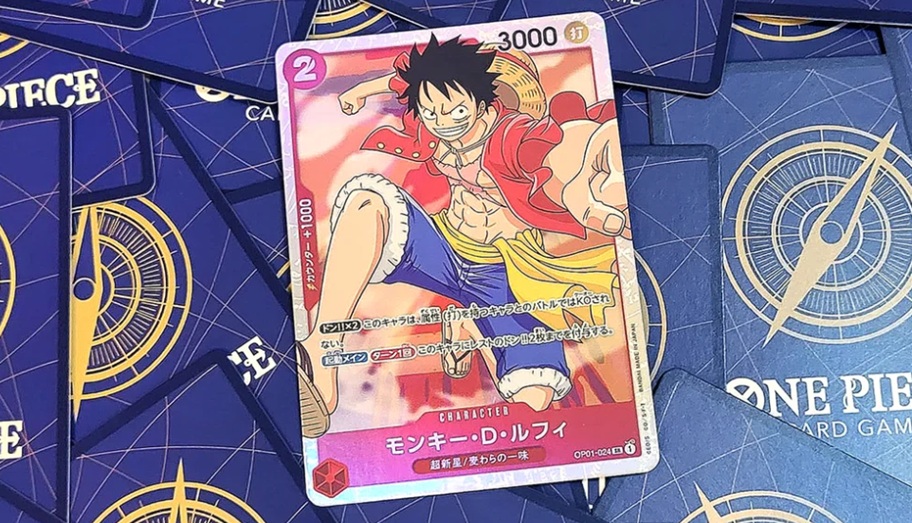
This is the question everyone actually wants answered, and the honest answer is: it depends what you’re buying and why.
For sealed products (booster boxes, starter decks), the Japanese version is almost always cheaper up front thanks to that lower MSRP. But it can also hold or gain collector value over time because of smaller print runs and region-exclusive promos that never made it to English markets.
For individual chase cards, it flips depending on the card. Take the Alternate Art Luffy from OP05 – the Japanese print of that card goes for under $100, while the English version of the same card sells for around $800. That’s not a typo. English demand, driven by a much bigger tournament and collector base in the US, Europe, and Australia, can massively outstrip Japanese demand for the same piece of cardboard.
But that’s not a universal rule. Japan-exclusive promos (things given out at local tournaments, conventions, or Bandai store events) can be worth a fortune specifically because they never got an English release. Those cards aren’t “Japanese vs English” comps at all; they’re just rare, period.
Basically, Japanese cards carry prestige, regional exclusivity, and cultural weight that keeps demand strong for iconic characters and event-only promos. English cards benefit from a global buyer base, an active grading scene, and tournament-driven hype that creates more reliable long-term resale value.
Anniversary Sets Are a Good Case Study
The anniversary box sets (1st, 2nd Anniversary, etc.) are a great example of how murky this gets. You’ll see listings for “Japanese version” and “English version” sets of the same anniversary box, and pricing swings wildly by seller, region, and whether it’s still sealed. It’s less about one language being definitively worth more, and more about scarcity in whatever market you’re shopping in at that moment.
So, Which Should You Buy?
- If you’re playing competitively: buy English. It’s the only option for official tournaments, full stop.
- If you’re collecting for the art and don’t care about playing: the One Piece TCG Japanese product is often cheaper to get into and can feel more “premium” thanks to the original artwork and tighter card layout.
- If you’re chasing investment-grade cards: research the specific card. Some alt-arts are worth dramatically more in English due to demand size; others are worth more in Japanese because of scarcity or exclusivity.
At the end of the day, no blanket rule says “Japanese is always cheaper” or “English is always worth more.” It comes down to the individual card, the print run, and which player base is currently obsessed with it. Do a little digging on recent sold listings before you drop real money – the market moves fast, especially around new set releases and anime arcs that suddenly make a character hot again.