
If you’re a firearms enthusiast or someone who enjoys shooting, you’ve probably noticed that when it comes to optics, the terms “red dot,” “reflex sight,” and “holographic sight” get thrown around almost interchangeably. However, the fact remains that while they’re similar, they’re certainly not the same thing. So, let’s take a look at what each piece of technology can do and when you can use it.
First, a Quick Primer on How They Work
To better comprehend their differences, let’s start with a brief explanation of how each sight works.
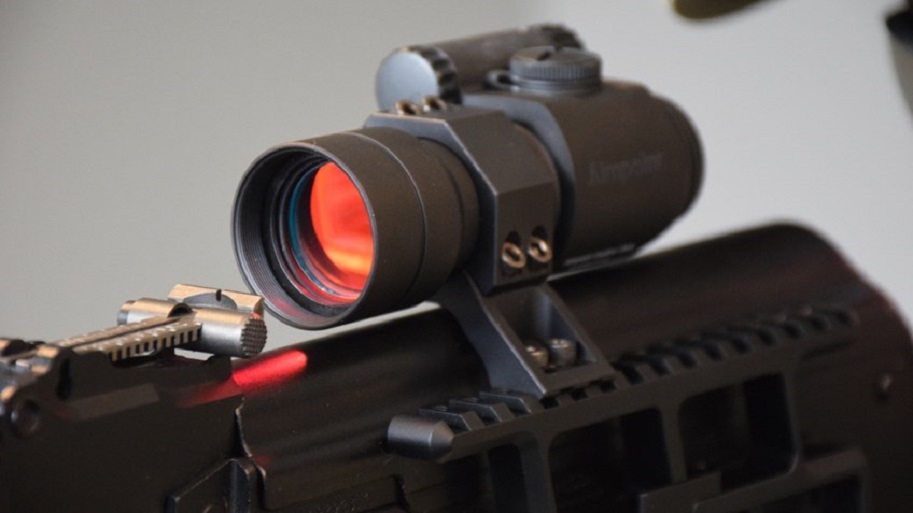
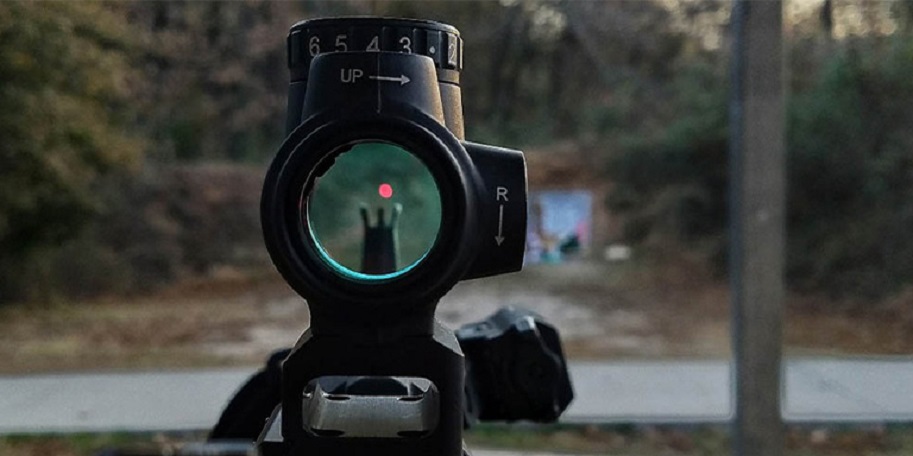
The red dot sight option uses an LED light that creates a dot when projected on a coated lens. The shooter aims at his target by aligning the dot – simple, effective, and time-tested. The term “red dot” is frequently used to describe any non-magnifying optical device, but technically speaking, it defines only a tube-like design.
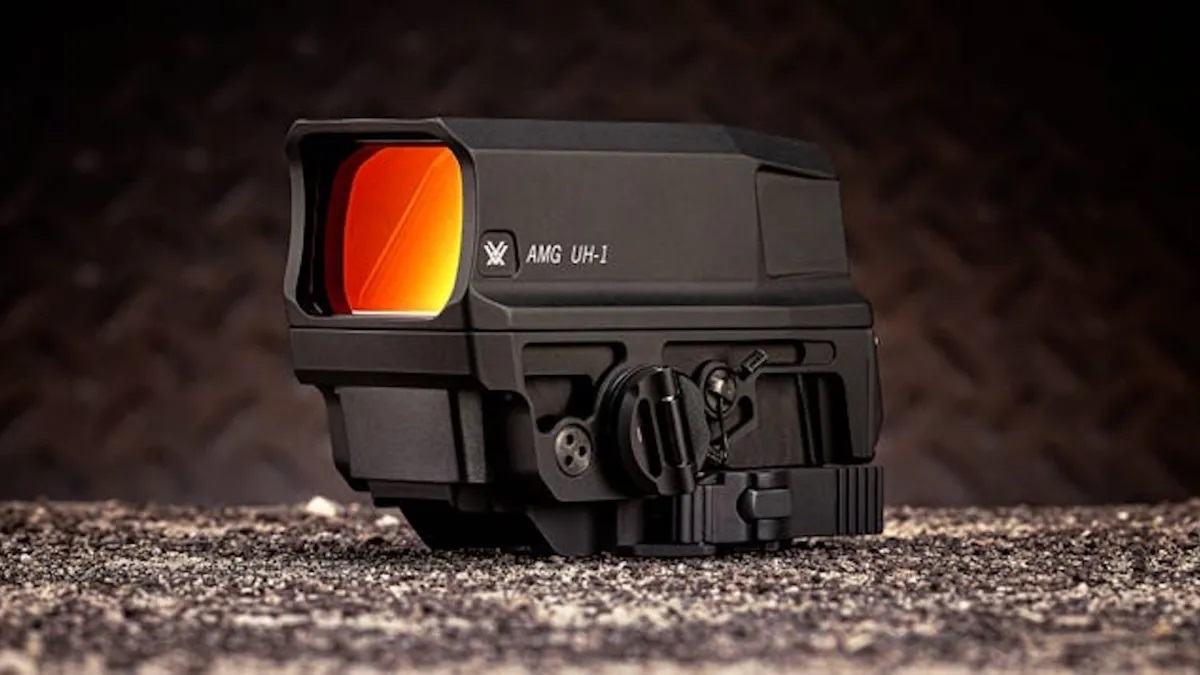
Reflex sights may be considered a subcategory of red dot since they employ almost identical technology but lack the tube housing. In reflex sights, the dot is reflected using an open, curved lens with an LED light source that bounces off the lens to create the aiming dot. This allows for a more compact and lightweight design.
Holographic sights operate using an entirely new principle. Instead of creating a dot, they feature a holographic reticle engraved into the lens that gets illuminated by a laser. The resulting reticle appears to be three-dimensional.
Red Dot Sights: The Reliable Option
The reliable red dot sight in the classic tube style has been around for decades, and for good reason – they are simply effective tools.
Pros:
- Their battery life is remarkable. Most red dot sights will provide tens of thousands of hours of use before requiring a battery change, and some high-end models can even last up to three years of continuous use with just one battery.
- Durability is another strength. The sealed tube design offers better protection against dust, water, and shock than open designs.
- Price range varies greatly. Reliable red dot sights in Canada can be found for as low as $100 all the way up to $1,000+, which makes them accessible to different budgets.
Ideal for: Rifles used for home defence, hunting, general-purpose shooting, or anyone who wants a dependable optic that won’t quit.
Reflex Sights: Small, Fast, and Ubiquitous
Reflex sights have become immensely popular lately, especially as PMOs (pistol-mounted optics) have become common. They are great choices for both concealed-carry and competition shooting due to their small size and design.
Pros:
- Size and weight are the standout features. They add minimal bulk, crucial when talking about handgun use.
- Extremely wide field of view owing to the lack of ocular lens – the design is essentially an open sight, so target acquisition is fast and natural.
- Outstanding versatility. The same design suits pistols, AR-style rifles, carbines, and even crossbows.
The trade-off: The open emitter design leaves these sights prone to dust and other factors that might cause damage. In some cases, the dot could be affected by sun glare or high-contrast backgrounds. There are closed emitter designs that solve the problem at hand, but cost significantly more.
Good for: concealed-carry pistols, competition shootings, lightweight builds, and shooters who prioritize speed and a clean sight picture.
Holographic Sights: Premium Performance
Holographic sights have reached the top in the hierarchy of technological evolution, and of pricing, too. However, for most people, especially when it comes to tactical and professional use, this kind of sight is a worthwhile investment.
Pros:
- Unmatched reticle clarity. The holographic image floats in front of your eyes, providing zero parallax error and keeping your aim point accurate despite any slight misalignment between your eye and the sight optics.
- Large field of view, making sure your target is clearly visible without any distractions.
- Natively compatible with night vision goggles in most of the models.
- Drawbacks: Short battery lifetime compared to that of the red dot sight. Expect about 300 to 1,000 hours. They are larger and cost about $500 minimum, with high-end models reaching over $1500.
Suitable for: Tactical and military use, law enforcement, serious competition shooters, and enthusiasts who want the best optical experience available.
So, Which One Is Right for You?
The answer is almost completely dependent on your intended purpose.
- For a duty, military, or hard-use rifle application, a tube-style red dot is the way to go. The battery life and ruggedness are in a class of their own, and the technology has been proven across decades of real-world use.
- For a carry pistol or a lightweight home defence setup, a reflex sight is the way to go. It makes the most sense from a size and mounting standpoint, assuming you choose a quality manufacturer.
- For dynamic, close-to-medium range shooting, especially if you have astigmatism or shoot in a high-end tactical competition setting, a holographic sight is worth the high cost.
All three technologies are effective. None of them is better than the others in all situations. The best technology for you is the one that fits your purpose, your platform, your eyes, and your budget. The good news is that all three designs have evolved to a point where quality models from each category will serve you well.