
Airbrushing is one of those artistic techniques that are sophisticated but really is well within grasp if you know the basics. As a new entrant, the key is to understand how the device operates, master basic strokes, and build confidence gradually. If you want to customise model kits, paint canvas, or create original details on furniture, airbrushing can be one of the best ways of putting your ideas across.
Airbrush
The star of the show is the airbrush. It is a miniature paint gun that allows you to control the air and paint flow at the same time. The majority of individuals who are inexperienced start off with a dual-action airbrush, where you press the trigger down and release air, and draw your finger back to control the flow of paint. This gives you much more control over shadows and detail than one action with an airbrush, which is simpler but more limiting.
Airbrushes come in different sizes and nozzle diameters, which determine how fine or wide the spray pattern will be. For accuracy work like cake decorating or model painting, a small nozzle is the way to go. For bigger projects, like murals or furniture, use a big nozzle to cover the surface area instantly. Whichever you choose, remember to clean your airbrush as dried paint can quickly clog the nozzle and ruin your smooth finish.
Airbrush Compressor

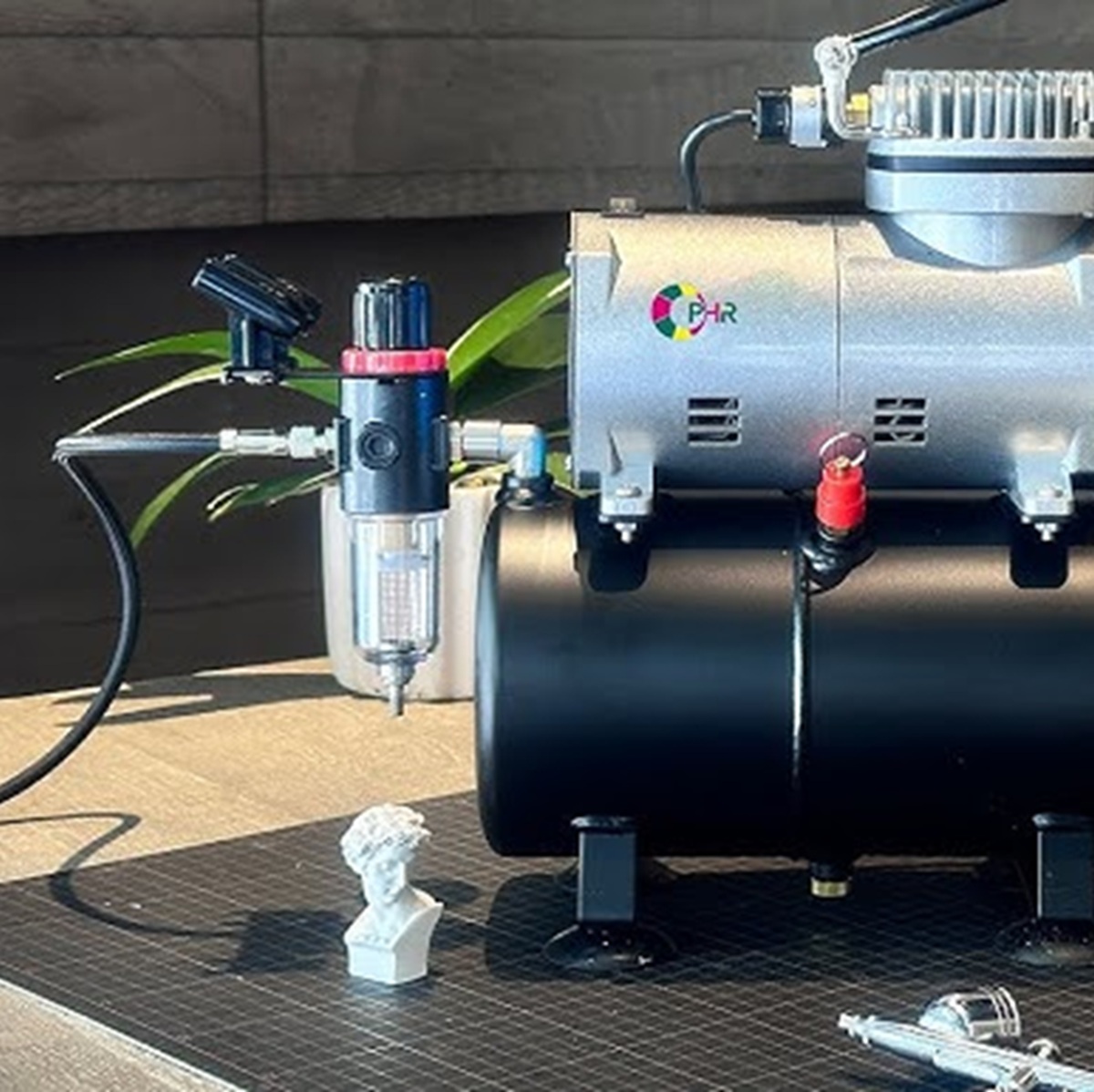
While the airbrush takes centre stage, the compressor is the behind-the-scenes crew that keeps it all running. A responsive and user friendly airbrush compressor is the device that provides a continuous supply of air needed to push the paint through the airbrush. Without it, your airbrush simply won’t work. In contrast to the large, loud compressors for heavy machinery, airbrush compressors are constructed small, quiet, and much more fragile.
It’s how it does it that’s clever and straightforward. The compressor draws in air, pressurises it, and then supplies it to your airbrush at a consistent pressure. That means it’s required because pressure directly affects the way your paint flows. Too much pressure and the paint will splatter and blow out unevenly, and not enough pressure equals thin coverage and frustration. Most compressors also let you regulate air pressure using a regulator, so you are free to experiment with various effects and varieties of paint.
Another handy feature on most airbrush compressors is the moisture trap. Since air always contains moisture, it can sometimes follow the air down the hose and find its way into your paint and create unsightly blotches. The moisture trap prevents that from occurring, providing you with clean, dry air every time. Some compressors also have automatic shut-off, which means they only run when you’re squeezing the trigger on your airbrush, making them quieter and more efficient.
One of the best things about having a dedicated airbrush compressor is consistency. Of course, you could theoretically just use something like compressed air from a can to start with, but that won’t last long; there is no consistent pressure, and it ends up being more expensive over the long term. A compressor gives you control, reliability, and freedom to work on your projects without interruption.
Once you’ve got your compressor and airbrush paired together, you’ll notice how smooth and precise the spray feels compared to other methods of painting. It makes it so much easier to mix colours, to shade and to add finer details, and that is justification enough to turn one-time users into lifelong devotees.
Paint
With airbrushing, not all paint is the same. Airbrush paint is formulated to be thinner and have a more fluid consistency than standard paints. Acrylic-based paints are favoured because they’re water-based, non-toxic, and simple to clean up. Some paints are made with a specific use in mind, such as food-grade colouring for cake decorating or industrial coatings for solvent-based paints.
What Is an Airbrush Used For?

It might seem scary to use an airbrush for the first time, but it is simply a matter of doing a few easy steps. Start by practising on scraps of paper or cardboard. Hold the airbrush like a pen and practice drawing straight lines, dots, and even shading. Remember that moving the trigger down lets air out, and pulling back puts paint in, so practice doing both simultaneously.
Benefits
The biggest advantage of airbrushing is the level of control. Unlike the brush strokes and streaking of normal brushes, an airbrush sprays paint in a mist for a perfect, even finish. It is perfect for gradients, shadows, and subtle highlights.
Airbrushing is also versatile. You can airbrush with paper, canvas, plastic, fabric, metal, cake, or even skin. That means it’s just one piece of gear that can be used across a wide range of hobbies and projects. To add, once you have it down pat, it’s typically quicker than normal painting methods, especially for big surfaces.
Airbrushing might seem like a specialised skill, but with the right tools and a bit of practice, anyone can do it. By understanding how the airbrush works, investing in a reliable compressor, choosing the right paint, and practising basic techniques, you’ll be well on your way to creating smooth, professional-looking results.