
Every commercial kitchen relies on professional cooking equipment to prepare large quantities of food. Stock pot burners are among the most essential pieces of equipment in restaurants and other food service enterprises.
They range in size, heat output and configuration. From natural gas and LPG options to cast iron and stainless steel construction, there are several factors worth comparing before you buy a stock burner.
Fuel Type
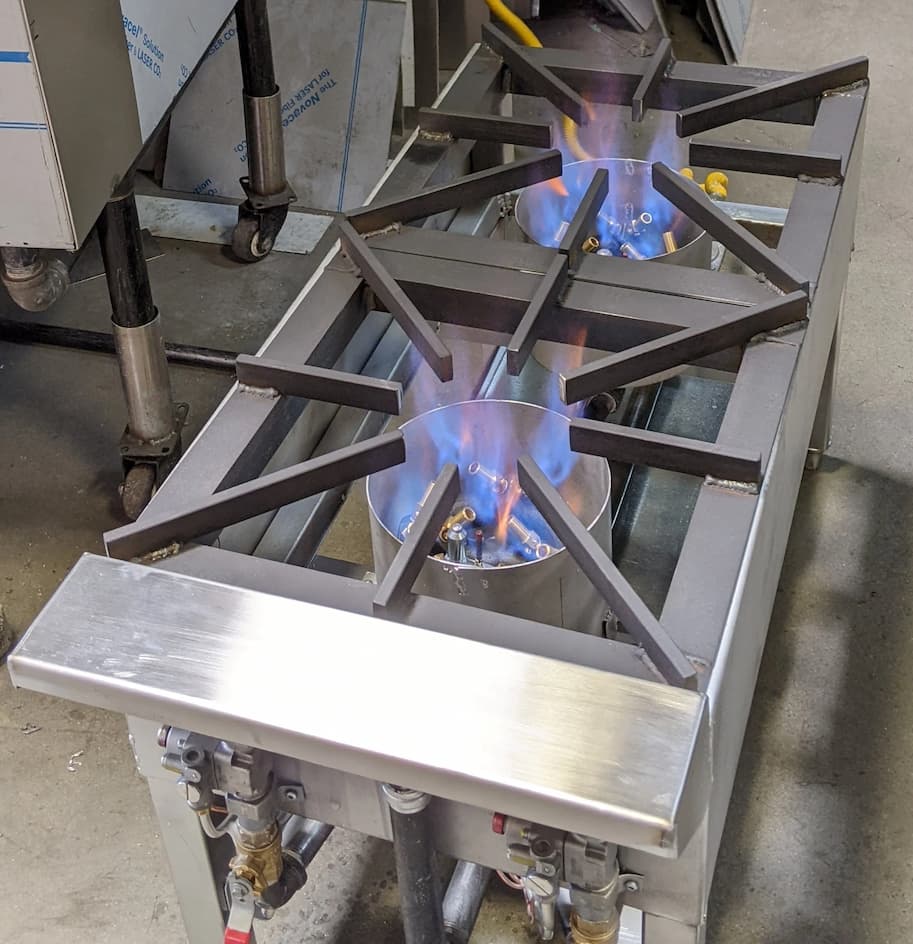
Natural gas and LPG (liquefied petroleum gas) are the two main fuel options you’ll come across when comparing gas stock pot cookers. The right choice will largely depend on the gas supply available at your premises. Natural gas is supplied through a fixed connection, so it’s a practical option for commercial kitchens already connected to a mains gas supply.
LPG, on the other hand, is stored in cylinders or tanks, so it can be useful for kitchens without access to mains natural gas. Some stock pot cookers are designed to run on either fuel, although they may require the correct conversion kit, regulator or jets for the selected gas type. Manufacturers can also specify different heat outputs for natural gas and LPG, so don’t assume that a burner will perform identically on both. For instance, some commercial models list higher BTU output on natural gas than LPG.
When choosing between the two, consider your existing gas infrastructure, fuel availability, operating requirements and installation needs. In Australia, gas appliances must also be installed in accordance with applicable gas installation requirements, so professional installation is important. A licensed gasfitter will make sure the stock burner is connected correctly, has adequate ventilation and is positioned with the required clearances from walls, surfaces and other equipment.
Material
The materials used in these units affect their durability, maintenance and day-to-day practicality. Cast iron is commonly used for the burners and pot supports because it is heavy-duty and can withstand the high temperatures and weight. Also, its substantial construction provides a stable surface for heavy cookware.
Stainless steel is commonly used for the body, sides and other external components because it is durable, corrosion-resistant and relatively easy to clean. In fact, many commercial stock pot units combine the two instead of relying on one material exclusively.
You’ll often find a stainless steel body paired with heavy-duty cast iron burners and grates. This combination makes sense in a busy kitchen: stainless steel keeps the exterior practical and easier to maintain, while cast iron handles the intense heat and supports heavy pots.
When comparing models, look beyond the headline material and check exactly which components are made from each. A stainless steel unit, for instance, may still have cast iron burners and grates where strength and heat resistance matter most. Also consider features such as removable drip or crumb trays, which can make regular cleaning much easier.
Number of Burners
The number of burners you need depends largely on how much food you prepare at once. A single-burner stock pot unit can be a practical choice when you regularly cook one large pot at a time and have limited floor space.
Double-burner models give you two separate cooking areas, allowing you to work with two large pots simultaneously. This can be particularly useful when preparing different components of a meal or handling multiple batches during a busy service. Some larger models are available with four burners, giving high-volume kitchens more cooking capacity in a single unit.
It’s also worth paying attention to the ring design. A three-ring burner uses concentric rings of flame and may have separate controls for the inner and outer rings, allowing the heat to be adjusted according to the size of the pot and cooking task.
Rather than automatically choosing the model with the most burners, consider your available space, typical pot sizes and how many large batches you need to cook at the same time. More burners can increase capacity, but the right configuration is the one that matches your actual workload.
Choosing the Right Stock Pot Burner for Your Kitchen
There is no single stock pot burner that will suit every food service operation. A smaller restaurant with limited space may have very different requirements from a catering kitchen where there’s preparation of several large batches at once. Start by considering how often you use large pots, how much cooking you do at one time and what type of gas supply is available.
Then compare heat output, burner configuration and construction quality. Look for heavy-duty components that can cope with commercial use, as well as practical features such as adjustable controls and removable trays that make everyday operation and cleaning easier.
If you’re choosing between natural gas and LPG, check the manufacturer’s specifications rather than assuming the two fuels will deliver the same output. Likewise, compare the number of actual burners separately from the number of burner rings. Taking these details into account will help you choose a stock pot burner with enough capacity and power for your kitchen without paying for features or cooking space you won’t use.