
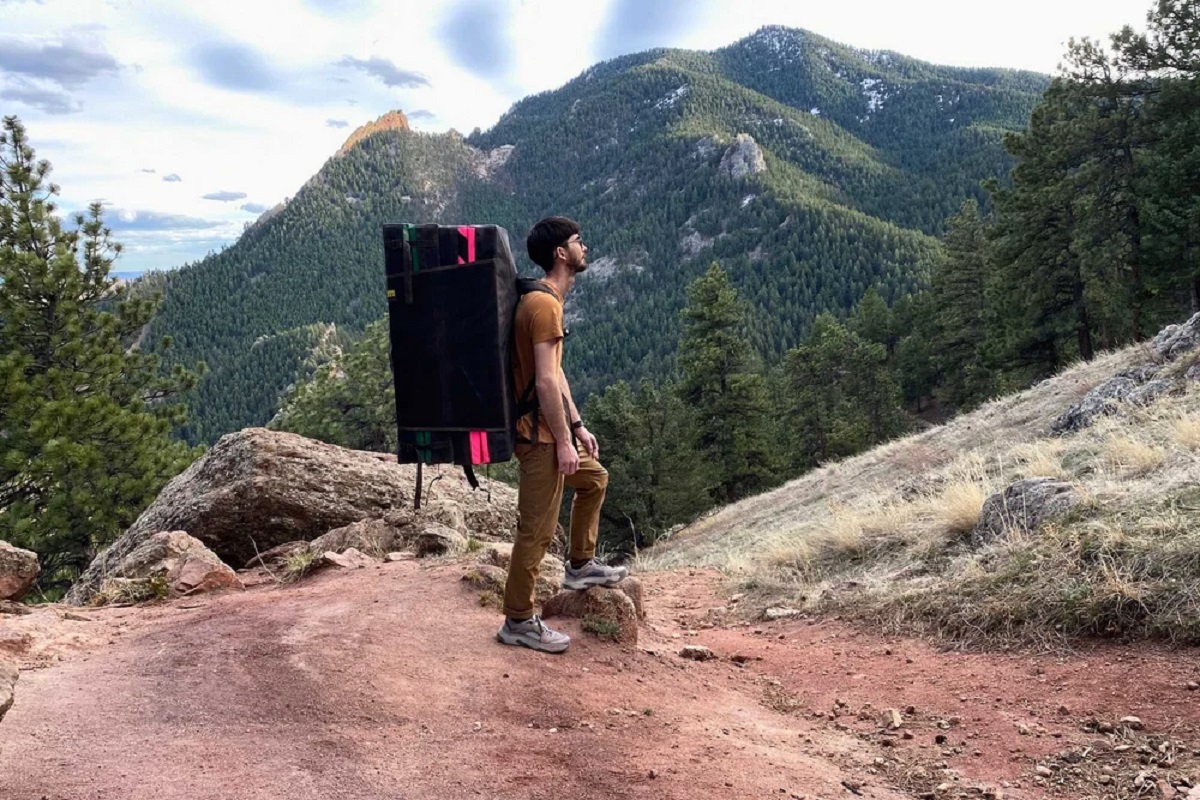
If you do bouldering, you don’t always need the same kind of pad. Sometimes, you need a big crash pad to cover the ground below your climb. Other times, a small sit pad is all you need for a quick rest between attempts. Both have their place, but they’re made for different jobs.
If you’re starting to shop for bouldering pads, think about where you climb and how much gear you want to carry. A full crash pad gives you a larger landing area, while a sit pad is smaller and easier to carry. Knowing the difference makes it easier to pick what works for you.
Bouldering Crash Pads or Sit Pads: Which One Fits Your Climbing?
Choosing a pad depends on what you need it to do. If you’re climbing a low boulder and want something small to sit on between tries, a sit pad can be handy. But if you’re climbing higher and need more ground covered beneath you, a full crash pad makes more sense.
When you pick bouldering pads, think about where you climb, how you get there, and how much gear you’re happy to carry. A sit pad is easy to grab and move around, while a crash pad is made to help protect your landing area. They aren’t really rivals, since each has its own job.
You might even find that having both makes sense for different days out. The trick is knowing what each one can do before you head off to climb.
Which One Gives You More Landing Coverage?
This one is pretty simple. A full crash pad covers much more ground than a sit pad. When you’re climbing a boulder, you need to think about where you might land if you fall, not just where your feet are when you start. A larger pad gives you more space to work with, though you still need to place it carefully.
Sit pads are much smaller, so they won’t cover a wide landing area on their own. They’re mainly there to give you somewhere to sit or rest, rather than to protect you from a fall.
When comparing bouldering mats, look at their size when fully opened. Think about the space beneath your climb and whether the pad can cover the areas where you may land. A bigger pad can help, but it won’t make every landing safe. You may need more than one crash pad, and a climbing partner should help check the setup when needed.
Which One Offers More Impact Protection?
A crash pad is made to help soften a fall when you land on it. It has layers of foam that help spread the force of the impact, giving you more protection than a thin pad. The foam thickness and overall build can all affect how the pad feels when you land.
A sit pad usually has a different purpose. It may be fine for sitting on the ground between climbs, but you shouldn’t treat it as a replacement for a proper crash pad.
If you’re choosing a bouldering crash mat, check what it’s designed for and how its foam is built. A thicker pad isn’t automatically the best choice for every fall, either. The landing area, the ground below it and the way the pad is placed all matter. Crash pads can lower the risk of injury, but they can’t remove it completely, so careful climbing and a good landing setup still count.
Which One Is Easier to Carry?
If you want to keep your pack light, a sit pad is the easy winner. It’s small, light, and simple to move from one spot to another. You can take it out when you need a break, then tuck it away without much fuss. That makes it handy for long days when you’re walking between different boulders.
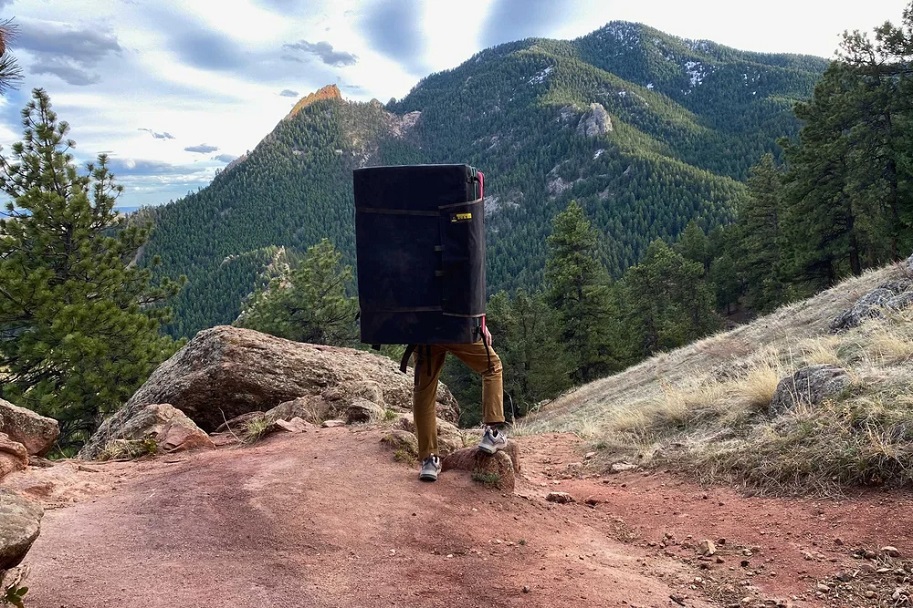
A full crash pad is a different story. It’s bigger and can feel bulky when you’re walking over rough ground or heading up a trail. Many models fold up and have straps to make carrying easier, but you’ll still need room for them.
When comparing bouldering crash pads, think about the walk from your car to the climbing spot. A short walk may be no problem with a larger pad, while a long hike can make every extra bit of weight feel heavier. Choose gear you can carry comfortably without making the trip harder than it needs to be.
Which One Takes Up Less Space in Your Car?
A sit pad barely takes up any room, so it’s easy to squeeze into a bag or tuck beside other gear. If your car is already packed with food, water, shoes and bags, that small size can be a real help.
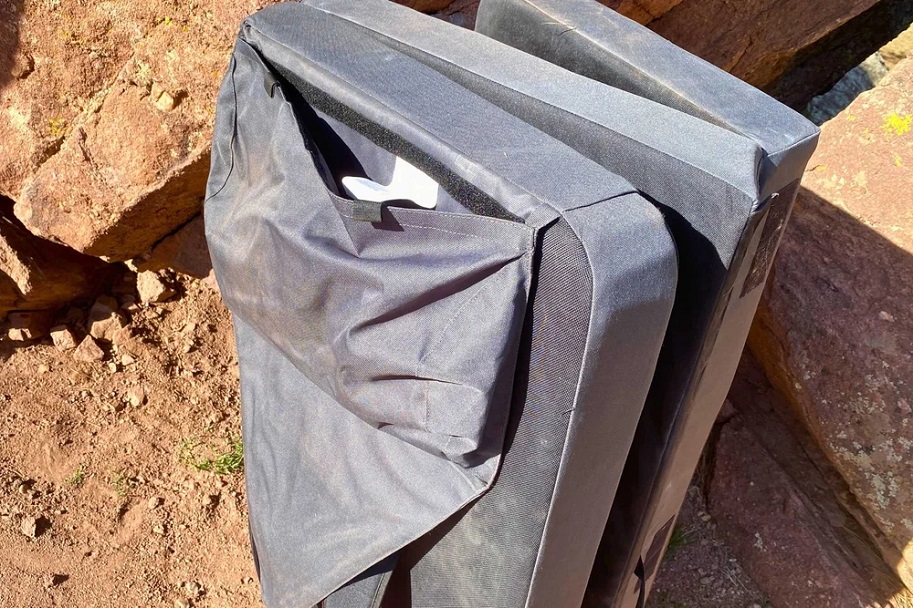
A full crash pad needs much more space, even when folded. Before buying one, check its folded size and think about where you’ll keep it in your car. You may need to move a few things around to fit it in.
If you often travel with friends, the space can get tight pretty quickly. A larger pad may be worth bringing when you need the landing coverage, but it helps to plan how everything will fit before leaving home. A sit pad is easier to pack, while a crash pad needs a little more thought. Neither choice is better for every trip; it depends on the gear you need and the room you have.
Which One Works Better on Uneven Ground?
Outdoor climbing spots don’t always have smooth, flat ground. You might find yourself dealing with small rocks, roots, or a slope beneath the boulder. A full crash pad gives you more area to work with, but it still needs to sit as flat and securely as possible.
A sit pad is small, so it’s easy to move around when you want a place to rest. However, it isn’t designed to create a safe landing area on rough ground. Before climbing, check the ground and move loose stones or other things that could make a landing more dangerous.
Place your crash pad carefully, and ask a climbing partner to help if the landing area is tricky. You may need to adjust the pad as you try different moves. Even with a good setup, uneven ground can make falls riskier, so don’t rely on the pad alone to keep you safe.