
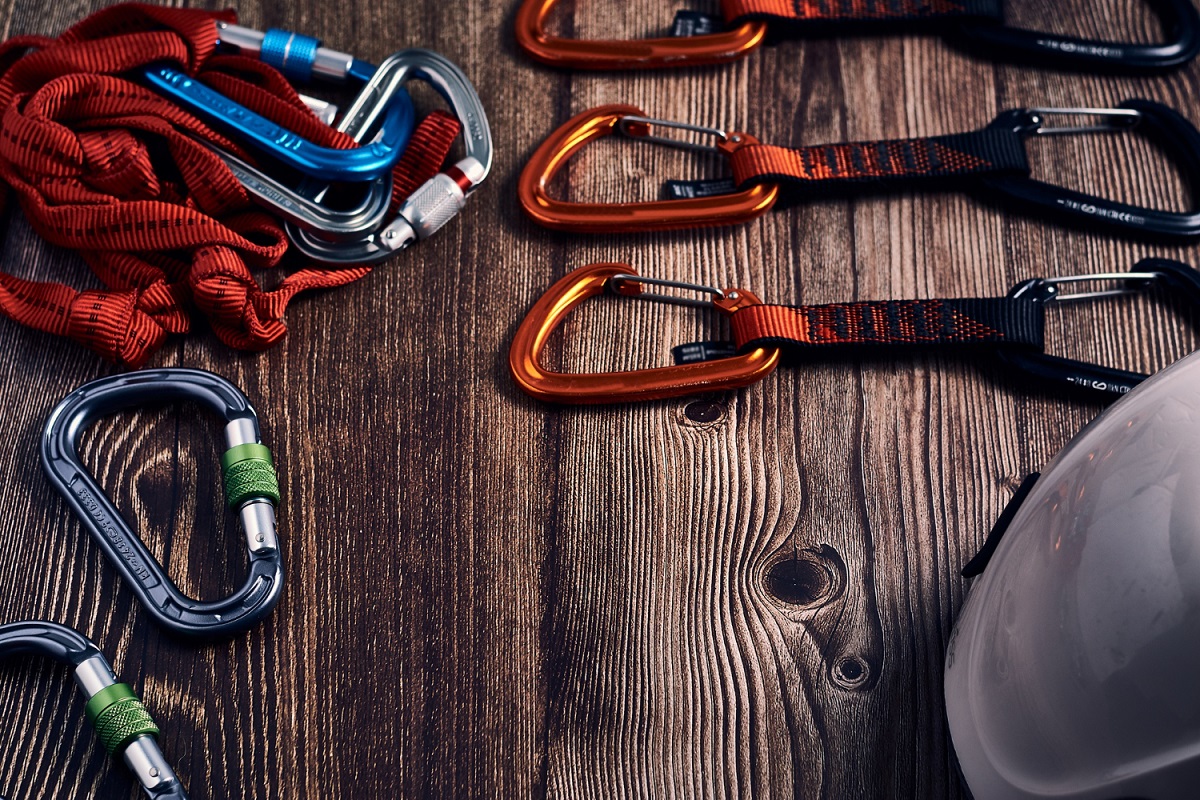
Carabiners are small but mighty pieces of gear that hold your climbing setup together. They connect ropes, harnesses, and protection points, keeping you safe every step of the way. If you’re a beginner, you can get confused by all of the shapes, sizes and locking mechanisms. That’s why you should learn a few things about them before spending your money.
What’s a Carabiner?
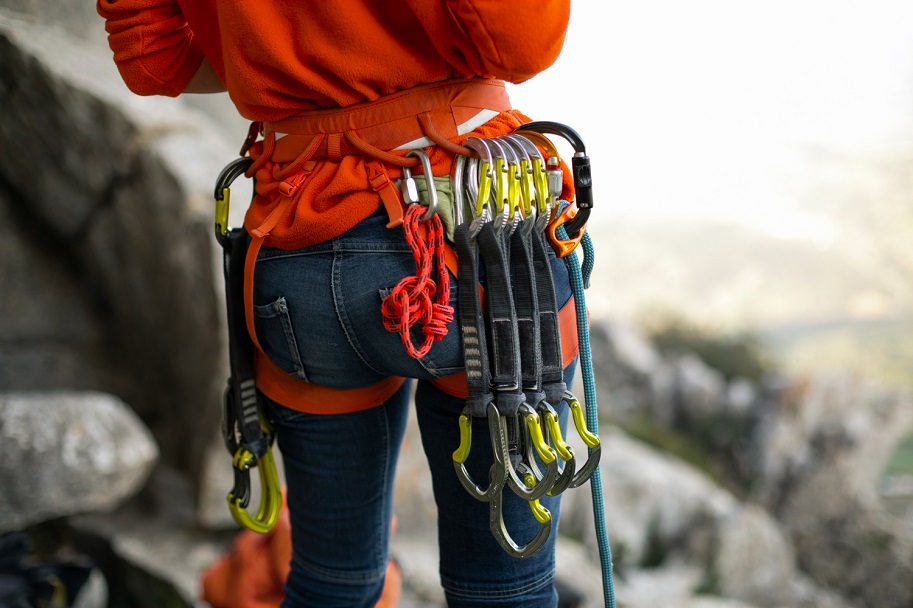
A carabiner is a small metal loop that has a spring-loaded gate that opens and closes. It may look simple but it’s a very important element in your climbing gear. It’s the piece that holds your climbing system together. These little links can be made of steel or aluminium. Aluminium ones are lighter and better for recreational use. Steel ones, on the other hand, are stronger and used in rescue or industrial work.
You’ll also notice that they have a strength rating. It’s measured in kilonewtons (kN) and the strength is marked on the spine. There are strong and durable climbing carabiners that are rated around 20–25 kN along the major axis. They can also have two types of gates: locking and non-locking. If you need security, go for locking gates. If you’re looking for options for quick clipping, non-locking gates will get the job done.
Types of Carabiners
Screwgate Carabiners
These carabiners have a manual locking sleeve. It twists up and down to secure the gate. They’re very reliable and versatile and often recommended for beginner climbers. They’re also strong and give you full control when belaying, setting up anchors, or attaching yourself to fixed points.
However, these carabiners need you to do an extra step in the locking process. This can be time-consuming and frustrating, especially if you’re in a hurry. Also, dirt and dust can get jammed in the threads over time. That’s why it’s important to clean them regularly. These carabiners are considered a staple in every climber’s gear and are a great place to start if you’re a beginner.
Auto-Locking Carabiners
These ones have a spring-loaded mechanism that automatically locks when you release the gate. They usually have twist-lock or triple-action systems that are simple to work with. Auto-locking carabiners add a layer of safety in case you forget to lock them. They’re easy, fast to use and great when you’re feeling a little tired.
Their downside is that they can be hard to handle in cold conditions or when you’re wearing gloves. Also, dirt and sand can block and interfere with the locking action, so be careful and keep the carabiner clean at all times. Overall, if you need safety and efficiency, they are the right choice.
Wiregate Carabiners
These carabiners have a thin wire loop as a gate instead of a solid metal one. Because of this design, they’re very lightweight and prone to gate flutter. A gate flutter is when a gate bounces open due to impact. They are less likely to freeze in cold and wet weather and are simple to handle.
Climbers often use them for alpine climbing and when every gram is important. On the other hand, they’re not as strong as the locking options and you shouldn’t use them for tasks like belaying. You can use them for clipping quickdraws or carrying gear because of their reliability.
Bent Gate vs. Straight Gate Carabiners
Both of these climbing carabiners are non-locking types, but they have different purposes. The straight gate ones are sturdy and great for clipping into bolts, protection points and gear. Plus, they’re durable and easy to handle. The bent gate ones have an inward curve, which makes clipping a rope a quick action. They’re very practical when speed and precision matter. Climbers often have both types on hand so they can move efficiently and stay organized.
Pear-Shaped Carabiners
These carabiner clips have a very distinct pear shape. They’re also known as HMS carabiners and are made for belaying and setting up anchors. They have a large opening and a rounded top. This shape distributes weight evenly and reduces wear on your ropes and gear. They have one disadvantage and that’s their weight and bulkiness. That’s why most climbers have one or two in their climbing setting. HMS carabiners are great for rigging and belaying. They’re versatile and provide smooth rope handling.
D-Shape and Offset D Carabiners
These are one of the most beginner-friendly and widely available carabiners. Because of the D shape, the weight of the load is distributed towards the spine, which is the strongest part. This gives them a perfect strength-to-weight performance. The offset D design offers a slightly larger gate opening, making clipping smoother.
Both versions are strong, versatile and good for almost every climbing purpose. However, they have a smaller gate opening and fitting multiple items at once can be a tricky task. Despite this, they’re a great choice for beginners. And if you’re starting your climbing journey, make sure you have a few of them in your gear bag.
Choosing the Right Carabiner for You
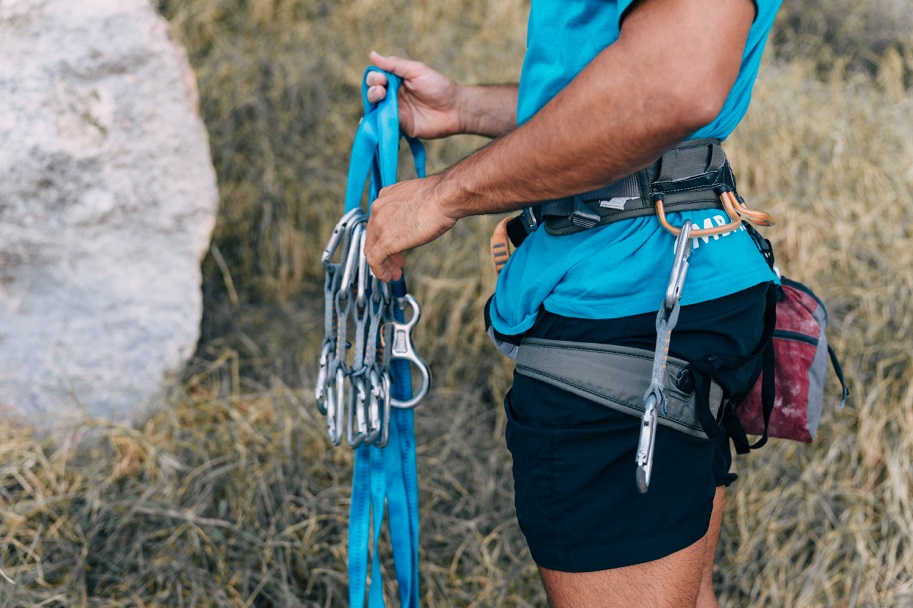
As a beginner, it can be hard to choose the first few carabiners. The key is to match them to the activity. For belaying, grab a locking type like HMS or screwgate. For quickdraws, use straight and bent gates. For racking gear, go for lightweight wiregates. You don’t have to buy every type in the beginning. Get the essentials and you can upgrade as you gain experience and explore new terrains.
In Summary
Carabiners might be small, but they play one of the biggest roles in your safety and performance. Learning how each type functions helps you make smarter gear choices and climb with confidence. Start with a few essentials that suit your goals and expand your collection as your skills grow. The more familiar you become with how carabiners work, the more natural it will feel to trust them as your connection to the rock.