
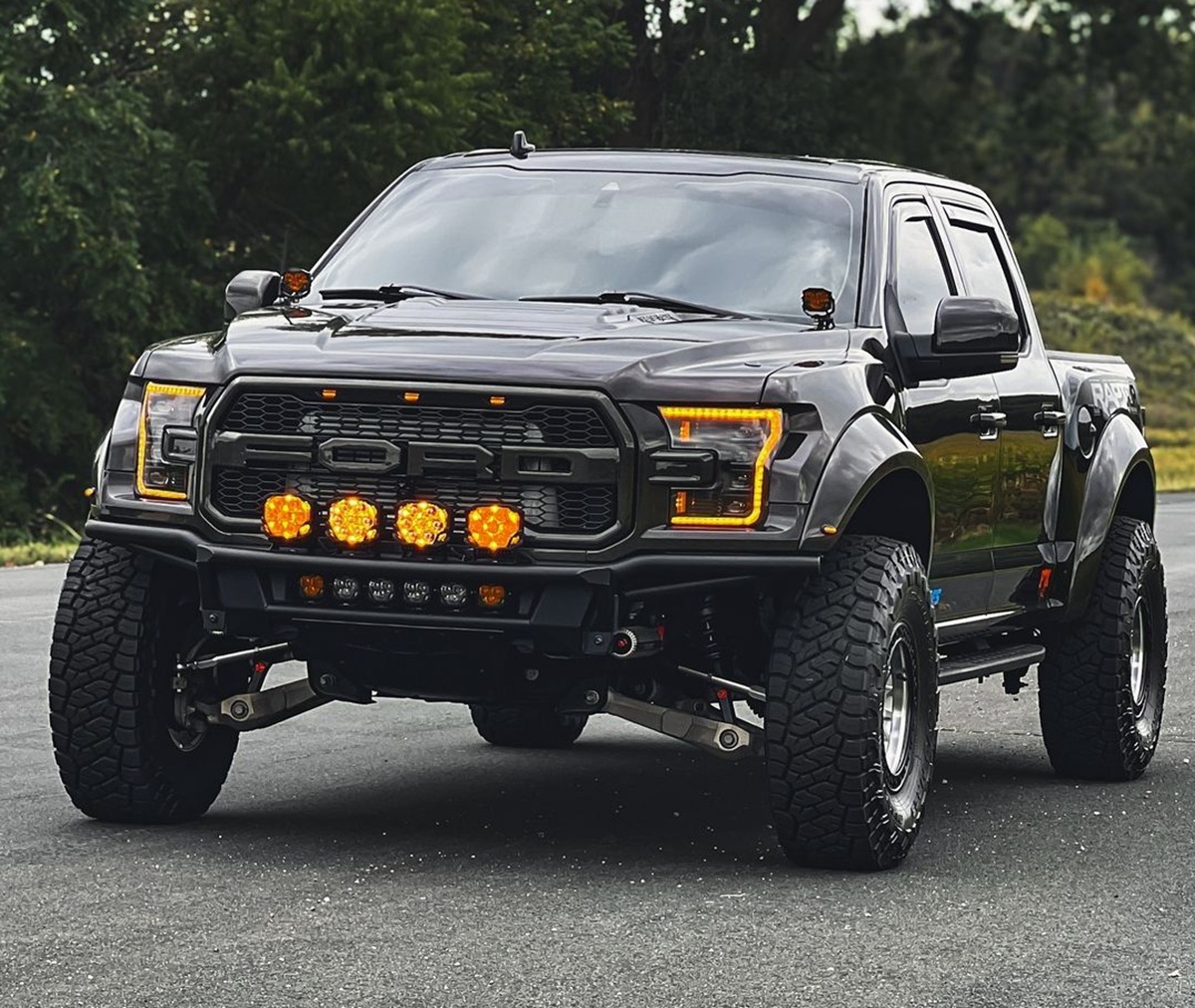
Ford’s EcoBoost engines in varying capacities are the Blue Oval’s new take on balancing high power with low fuel consumption. From the 3-cylinder 1.5 liter in the Bronco, the 2.3-liter four-pot in the cheaper Mustang or the six-cylinder 3.5-liter twin-turbo in the F-150, there’s quite a few EcoBoost engines to choose from. Obviously, vehicles, engine displacement and cylinder count differ, but all EcoBoost engines come with higher torque at lower RPMs than comparable aspirated engines in various guises, especially the 5.0 V8 in something like the Mustang Dark Horse or the F-150 Raptor. And this is where the biggest difference lies.
Faster acceleration, higher top speeds, lower weight, and the characteristic turbo kick all add to driving fun. Which engine you choose, though, will be based on your needs. The aspirated V6s and V8s are about linear pick up, with power building gradually. Ideal for the long haul with effortless power when you need it. And with simpler designs, they’re also easier and cheaper to maintain. The only downsides are the high fuel use and higher initial vehicle purchase price, something you might consider if you’re towing, doing more miles or on a tighter budget.
With that said, Fords fitted with the turbocharged engine can be modified with aftermarket Ford EcoBoost performance upgrades for even more pep, regardless if you’re after more power, improved engine efficiency or better consumption.
Air Intakes
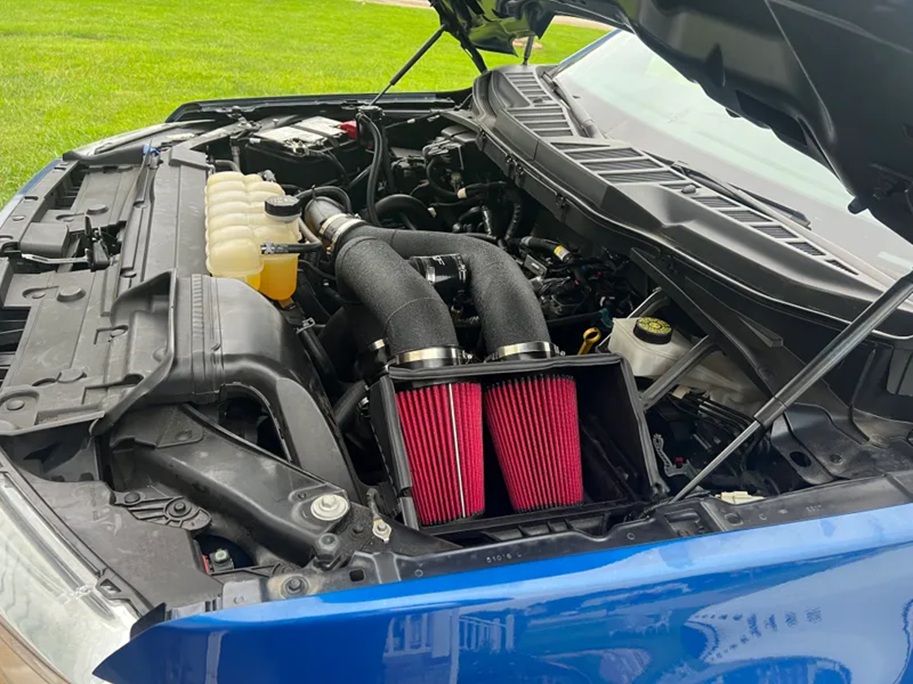
Getting more air in is the prerequisite for more power. Aftermarket cold air intakes push filters and piping to the front of the engine, near the bumpers, and draw cooler, denser, oxygen-rich air for cleaner and more powerful burns. Bigger cone filters do the turbocharged engine a favor by removing more pollutants and improving airflow. Heat shields and air boxes keep incoming air cool and shield from hot engine parts, further boosting power output and leading to cleaner, more efficient combustion. Power gains are estimated anywhere between 10 to 20 hp, with more responsive throttle, louder engine sound and faster acceleration compared to non-modded Ecoboost vehicles or their inline-6 and V8 alternatives.
Why Choose an Aftermarket Exhaust?
Stock Ford exhausts do a mediocre job of squeezing all the power from the engine, regardless of whether this is aspirated or turbocharged. Multiple bends, subpar materials and low-cost production methods all take a toll. There’s reduced airflow of spent gases, higher instances of restrictive backpressure, and more wear in the crush-bent mild steel. This hurts both performance and longevity.
Choose an aftermarket turbo-back exhaust for the Ecoboost engines to boost power and torque output, get a louder, deeper exhaust note, and have parts that can handle the higher temperature and pressure. Full systems include wider and straighter downpipe designs for improved turbo spooling and increased exhaust scavenging, mandrel-bent stainless steel for higher strength, heat and impact-resistance and layouts that get spent gases out faster with minimal pressure buildup. The better build also sheds weight, roughly 40 pounds in complete turbo-back systems.
Ford owners can also customize their exhaust system with different parts, ranging from muffler and resonator combos to improve the sound, wider midpipes for more mid-range torque, and cat-less exhausts if you’re using your Ford EcoBoost solely on the track. Real-world benefits are the faster acceleration, crisper throttle and an engine that likes to rev. Much like the supercharged and modified versions of the bigger V8s.
Install a Bigger Intercooler
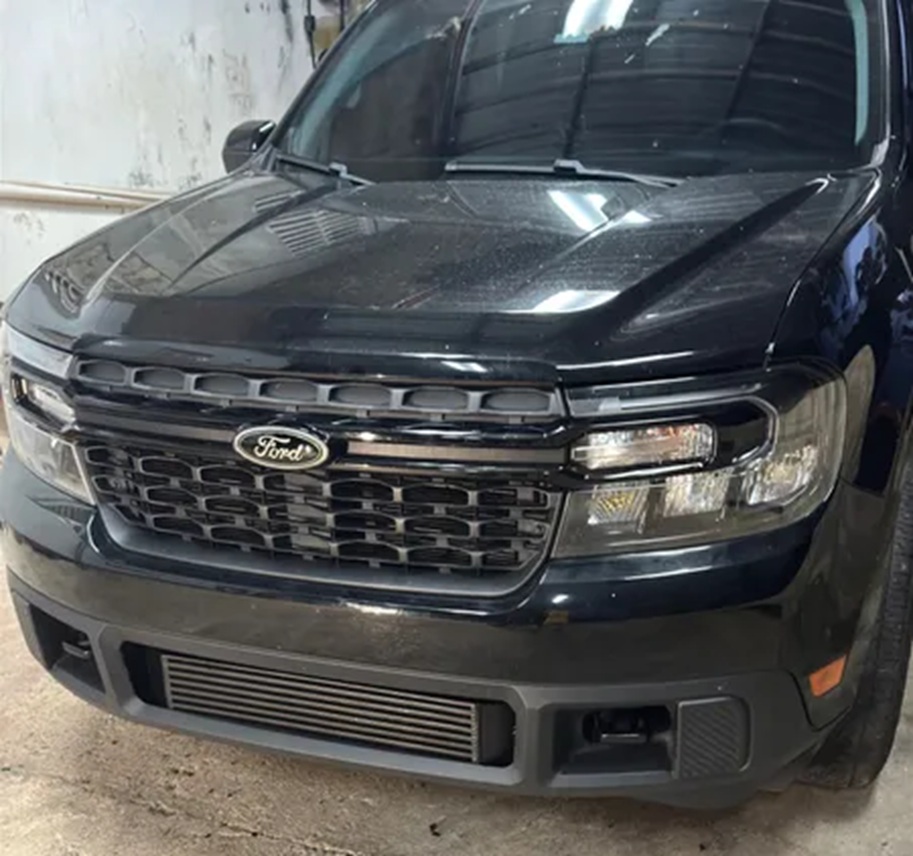
If you’ve already slotted a bigger air intake and dealt with spent gases by attaching a performance exhaust, aftermarket intercoolers are the next logical item on your Ford Ecoboost performance upgrades list. Intercoolers increase engine efficiency and output by cooling down the hot, compressed air before it reaches the combustion chamber. Hot air enters the intercooler, passes through the fins, and exchanges excess heat with the surrounding air. The stock intercoolers in the 2.7 and 3.5 Ecoboost engines in the F-150, Ranger and Edge (among other vehicles) were more hit and miss, struggling with higher air temperatures, lower density and reduced efficiency due to the smaller footprints and subpar builds.
For modded Ecoboost engines producing even more heat, look to a performance intercooler that matches new intakes and exhausts. These have significantly larger (up to 70 per cent) cores, wider inlet and outlet tubing, and aluminum hot-side and cast cold-side piping to ensure they last. Airflow in and out of the intercooler is maximized with bigger cast end tanks. These help with more efficient turbo spooling and higher power output to cram more compressed air into the engine.
Consider Blow-off Valves
To shield the turbo and engine from excess air pressure, consider a pop-off or blow-off valve. This small component is known for its hissing sound, as it discharges excessive boost pressure into the atmosphere when the throttle is closed. The part is installed between the air intake and throttle body and opens and closes when working the gas. While a blow-off valve doesn’t directly increase power, it prevents the compressor from stalling, and ensures consistent boost while also reducing turbo lag. Real-world benefits are faster acceleration and improved throttle response, especially during gear changes.