

Accurate yardages are crucial in golf because even small mistakes can cost strokes. Not that long ago, distance meant checking sprinkler heads or coloured stakes, then pacing out yardages to guess the right club. That process took time and often left room for doubt between shots. Even today, some golfers still play that way, but it can slow down decision-making and lead to missed opportunities.
Nowadays, getting precise distance information is much faster and more reliable. The real question is choosing the right tool. The golf rangefinders and GPS watches both deliver accurate yardages, but each comes with its own advantages and drawbacks.
How Each Technology Works
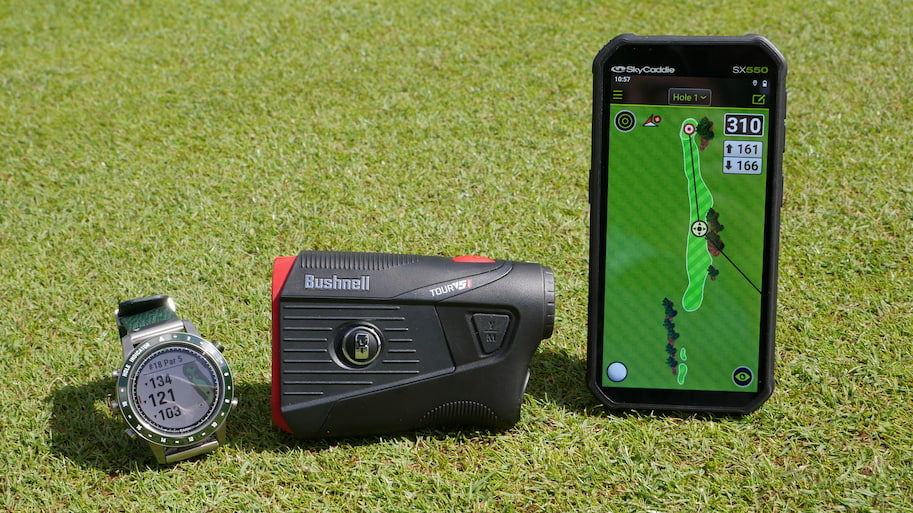
Rangefinder
Rangefinders use laser technology to measure the exact distance from your position to a specific target on the course, such as the flagstick, bunker, or hazard. You aim the device at the target, press a button, and the rangefinder calculates the distance based on how long it takes for the laser to return.
This gives precise yardages, which helps with confident club selection. Many advanced golf rangefinders focus on line-of-sight distances, making them popular for golfers who like clear, exact numbers for each shot rather than general front or back yardages.
GPS Watch
A GPS watch relies on satellite data and preloaded course maps to show distances on the golf course. Once the course is selected, the watch displays yardages to key points like the front, middle, and back of the green. You get this information at a glance, without aiming at a target or stopping play. While GPS watches may not lock onto specific targets, they provide consistent, easy-to-read distance data throughout the round.
Head-to-Head Comparison
Accuracy
Golf distance finders come out on top for accuracy. They give an exact distance to the pin, which helps golfers dial in club choice with confidence. GPS watches, on the other hand, show distances to the front, middle, and back of the green. That information is more than enough for many players, but those who like knowing the precise number to the flag often lean towards a rangefinder.
Ease of Use & Portability
GPS watches tend to feel more effortless on the course. They are small, lightweight, and designed to sit comfortably on the wrist, to the point where many golfers forget they are even wearing one. That said, the larger round screens found on many models can feel bulky for players who prefer a slimmer, traditional-style watch.
Laser rangefinders are also easy to carry, but in a different way. They usually come in a compact case that clips onto a golf bag for quick access. The device fits easily in the hand and does not add noticeable weight, even for golfers who carry their bag or use a push trolley.
The main drawback is usability. Rangefinders require a steady hand to aim and lock onto the pin. While stabilisation features help, some golfers still find it difficult to hold the device steady enough for consistent readings.
Course Information & Features
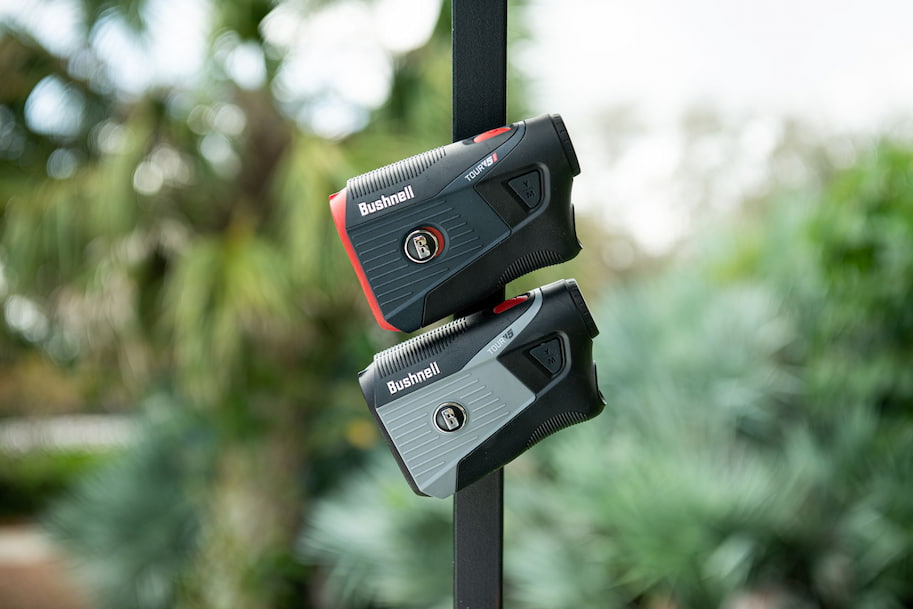
GPS watches provide consistent course information wherever you stand, showing key green distances throughout the hole. Rangefinders focus on visible targets, offering exact distances rather than broader course layout details.
Battery
Rangefinders use small replaceable batteries that last for dozens of rounds and are easy to change. GPS watches rely on charging, so keeping an eye on battery levels before a round matters.
Situational Limitations
Rangefinders can struggle on blind shots, doglegs, or in foggy or low-light conditions. GPS watches continue to work regardless of visibility or obstacles.
Cost & Value
Generally, GPS watches start at a lower price point and can include additional features like hole maps, hazard distances, and everyday smartwatch functions, offering good value for casual golfers. Rangefinders, especially models with slope and advanced targeting, often come at a higher upfront cost. They deliver pinpoint accuracy, which appeals to players focused on performance.
Beyond the sticker price, think about long-term value: replaceable batteries in rangefinders are inexpensive, while GPS watches require regular charging and may need replacement sooner. Choose based on what fits your budget and how you play.
How to Choose?
Choosing between a golf rangefinder and a GPS watch often comes down to a simple trade-off: speed and convenience versus precision. A golf watch instantly delivers yardage information. One glance at your wrist gives you distances, which keeps the play moving and removes any extra steps before a shot.
A golf rangefinder takes a little more effort. You need to take it out, aim at your target, and lock in the distance. That extra step can slow things slightly, but the payoff is accuracy. Rangefinders provide exact, down-to-the-yard distances, which is why many skilled players prefer them. If your game relies on precise numbers and confident club selection, that level of detail matters.
For more casual golfers, a GPS watch often feels like the better fit. General yardages to the green are usually enough, and the ease of use makes the game more relaxed.