

The benefits of 3D printing are undeniable in various applications, from rapid prototyping to toys, medical devices, and much more. But when it comes to planning and designing your next 3D printed part or prototype, one of the most important considerations is which type of filament to use. For many professional designers, the decision often revolves around choosing between PLA and ABS filaments.
What Are PLA and ABS Filaments?

Buying a quality and versatile PLA filament can take your 3D printing to the next level. PLA stands for Polylactic Acid. It’s a thermoplastic polymer derived from biodegradable materials like sugarcane and corn flour. As a bioplastic, PLA is widely employed in a variety of applications. It is also widely used in 3D printing since it is stiffer than ABS and nylon. As a compromise, PLA has low heat and chemical resistance.
Compared to many other 3D printing materials, PLA is quite cost-efficient, providing good value for money in exchange for high-quality components with relatively smooth surface finishes.
ABS is another typical thermoplastic (acrylonitrile butadiene styrene). It’s a standard 3D printing fixture and is well-known in the injection moulding industry. ABS is used in a variety of real-world applications, including toys (think LEGO bricks), electronic housings, automobile parts, household appliances, and more. ABS is tougher and more impact-resistant than PLA, while also being lighter and more durable.
The Strength
PLA and ABS have similar tensile strengths, making them good choices for a variety of prototyping applications. Designers and engineers frequently favour ABS over PLA filaments because of its superior ductility. ABS has a stronger flexural strength and elongation before breaking than PLA, making it suitable for end-use applications. PLA, on the other hand, is better suited for quick prototyping where form is more important than function.
Overall, PLA is a fantastic choice for custom parts that will not be subjected to a lot of physical stress. ABS is more suited to industrial applications and can withstand physical strain better than PLA.
Surface Finish
Whether you use PLA or ABS, you will still be able to view layers. In terms of aesthetics, PLA printing often results in a glossy finish, whereas ABS printing produces a matte look. For designers who want to print with ABS while maintaining a smooth, glossy surface, use acetone in post-processing. Engineers who desire an even smoother surface than PLA can utilise sanding and milling in post-processing, but these procedures must be handled with extreme care.
Heat Resistance
ABS has a glass transition temperature of 105°C, while PLA’s is 60°C. As a result, any parts used in high-temperature conditions should be 3D printed with ABS rather than PLA. When exposed to temperatures of 60°C or higher, the structure of a 3D PLA filament can quickly be damaged, resulting in deformations. This is especially true when the PLA portion is subjected to significant levels of physical force.
Printing Speed
PLA and ABS print at almost comparable speeds. This implies you don’t need to adjust the speed settings on your FDM machines when switching between materials. Printing at 60 mm/s is very common for a PLA filament, however, some operators have printed at speeds exceeding 150 mm/s, indicating that the normal pace is far from the limit. You may also print ABS at the same speed, but 40-60 mm/s is slightly more accurate for this material.
Biodegradability
PLA 3D filament is stable under normal air circumstances, however, it degrades in industrial composters in 50 days and water in 48 months. While ABS is not biodegradable, it can be recycled. Therefore, manufacturers tend to use PLA to construct food service items, though we strongly recommend you get safety confirmation from filament manufacturers.
Is PLA or ABS Better for Your Application: The Verdict
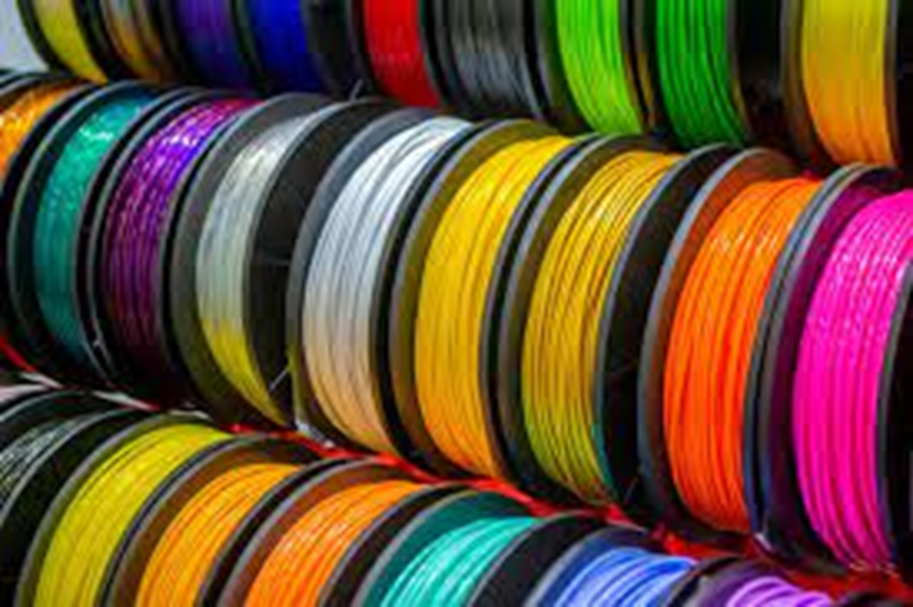
The choice between ABS and PLA filaments for your 3D printed prototype or part is determined by the application’s specific needs and use case. It is not a one-size-fits-all option, and you should carefully consider all of the aspects involved in each strand to make the best choice.
If aesthetics is a priority, PLA filaments are an excellent choice, especially if your item has elaborated or complicated details. These qualities make PLA suitable for prototyping. Toys, containers, and architectural mock-ups also contain PLA.
ABS is preferable for items that require increased strength and heat resistance. Furthermore, ABS filaments are more resistant to corrosion than PLA filaments. ABS is ideal for applications that require moving parts, as well as for printing products like phone cases and bags.
In terms of cost, there is little variation. Their prices are among the most reasonable for 3D printing materials. Colour, brand, and shipping fees determine the price of PLA and ABS filaments respectively.